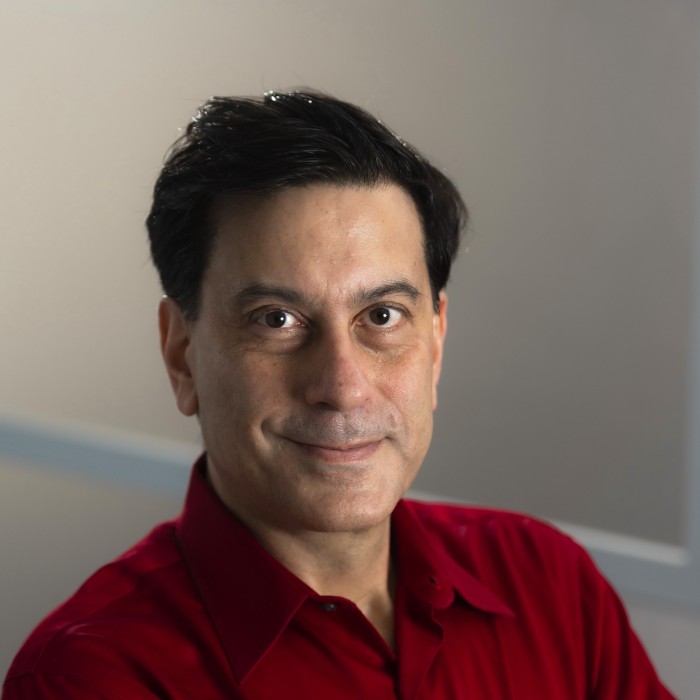
Michael Lounsbury


EGOS Honorary Member 2026


Laudation by Markus A. Höllerer


It is a great honor and immense privilege to present to you – on behalf of the EGOS Board and the entire EGOS community – the 2026 EGOS Honorary Member: Professor Michael Lounsbury.
 

:

As you know, this distinction is awarded to scholars who have made pioneering and lasting contributions both to the advancement of knowledge in the Social Sciences, dealing with organization, organizing, the organized, and organization-society relationships, and to EGOS as an intellectual community and scholarly association. Mike has made extraordinary contributions on both counts.
 
Looking across his remarkable career, what strikes me most is not only the scope of his accomplishments, but also a recurring pattern. Again and again, Mike has been a builder: a builder of ideas, of communities and conversations, of scholarly institutions – and a builder of people.
 
Let me begin with Mike’s scholarly contributions. Over more than three decades, Mike has helped shape some of the most important intellectual conversations in organization studies. His scholarship has fundamentally influenced how we think about institutions, entrepreneurship, culture, markets, professions, social movements, and innovation. Few scholars have left such a broad imprint across so many domains while maintaining such a distinctive intellectual voice.
 
Looking across his body of work, one theme stands out: Mike has consistently expanded our understanding of how institutions matter. At a time when institutional theory was often criticized for portraying organizations as overly constrained by taken-for-granted rules and structures, Mike helped bring institutions back to life. Through his work, institutions became not merely frameworks that shape behavior, but dynamic systems of meaning, practice, conflict, and possibility.
 
Perhaps nowhere is this influence more visible than in the development of the institutional logics perspective. Together with his collaborators, Mike helped transform logics from a promising theoretical idea into one of the most influential research programs in contemporary organization studies. He provided generations of scholars with a powerful vocabulary for understanding how multiple value systems coexist, collide, and interact within organizations and fields.
 
At the same time, Mike played a foundational role in establishing another stream of research: cultural entrepreneurship. Long before narratives, meaning-making, legitimacy, and symbolic action became mainstream concerns in entrepreneurship research, Mike’s work demonstrated that entrepreneurship is not simply an economic process: it is also a cultural accomplishment. New ventures succeed not only because they mobilize resources, but because they create compelling stories, construct identities, and persuade audiences that new possibilities deserve to exist. This insight fundamentally reshaped how many of us understand entrepreneurship and innovation today.
 
What is remarkable, however, is that Mike never confined himself to a single domain. His work ranges from the recycling movement and mutual funds to nanotechnology, social entrepreneurship, professions, markets, communities, and emerging technologies. And yet, across all this diversity, a coherent intellectual project remains firmly visible.
 
Few scholars can claim to have produced influential concepts. Fewer still can claim to have created enduring conversations. Mike has done both.
 
His influence extends far beyond any single discipline or scholarly community. His work is read and cited across organization and management theory, sociology, entrepreneurship, and innovation studies. It has shaped research agendas around the globe, and the many recognitions Mike has received throughout his career are evidence of a scholarly contribution that is not only substantial, but lasting. And perhaps that is the most important point. Mike’s work has not simply generated findings. It has expanded what our field is able to see, what questions we are able to ask, and what possibilities we are able to imagine.
 
But then scholarship alone is not what makes Mike so deserving of this recognition. A second dimension I would like to emphasize is his contribution to our scholarly community.
 
Mike has long been one of our great community builders.

He has invested considerable energy in creating the intellectual spaces in which knowledge can flourish.For many years he has served as editor, organizer, convenor, mentor, workshop leader, and intellectual catalyst. Through his long-term stewardship of Research in the Sociology of Organizations, through his editorial leadership at Organization Studies and other journals, and through countless developmental initiatives, he has helped shape the intellectual infrastructure of organization and management studies itself.

For EGOS in particular, Mike has been a remarkably committed citizen. He has been a regular sub-theme convenor, standing working group organizer, panelist, discussant, and participant for well over two decades. Many of us have encountered Mike not only through his writings but also through the conversations, debates, workshops, and developmental spaces that make EGOS such a distinctive scholarly community.
 
Mike has also been a bridge-builder across the Atlantic, for instance helping connect EGOS and the OMT Division of the Academy of Management, and by being a devoted champion of our two journals, Organization Studies and Organization Theory. Throughout his career, he has embodied the spirit of intellectual openness, regardless of geography.
 
Perhaps most importantly, Mike has been a mentor to several generations of scholars. Many people in this (virtual) room – and many more around the world – can trace important moments in their intellectual development to a conversation with Mike, a workshop he organized, a paper he commented on, a coffee meeting he made time for, or simply a question he asked.
 
Which brings me to a third dimension that I wish to emphasize: the human being behind the scholar. In academia, we too often celebrate publications, citations, and awards while forgetting the people who make intellectual communities possible in the first place.
 
What I have always appreciated in my own academic interactions with Mike is his remarkable ability to identify precisely the question you were hoping nobody would ask. His comments are incisive, occasionally unsettling, but always constructive. He has a gift for exposing weaknesses in an argument without diminishing the person making it. He challenges when challenge is needed, encourages when encouragement is needed, and always manages to leave you with a better idea than the one you arrived with.
 
Mike regards people not only as scholars, but as human beings. I have experienced this personally over many years. He first entered my life as a PhD supervisor. Over time, he became a trusted colleague, and today I am proud to call him my friend. Mike, I feel, perfectly matches intellectual rigor with genuine generosity and care; critical engagement with deep curiosity; seriousness with humility; and scholarly ambition with an enduring commitment to helping others succeed.
 
Many of us were deeply moved during last year’s EGOS Colloquium in Athens when Mike spoke about his family’s history and about what it means being the son of a Palestinian refugee growing up in the United States. What made that moment so memorable was not only its personal openness, which is unusual, but also the way it illuminated something that runs throughout his scholarship: a concern with identity, belonging, legitimacy, voice, and social change.
 
It also reminded us that behind all the theories, concepts, and publications stands a scholar whose intellectual curiosity has always been connected to larger questions about human experience and social life.
 
Mike, your scholarship has shaped how we understand institutions and organizations – and our role vis-à-vis them. Your community-building endeavors have helped shape the field in which we conduct our scholarship. And your generosity, integrity, intellectual curiosity, and friendship have shaped many of the people gathered here today, for the better.

For all these reasons – and on behalf of the entire EGOS community – it is my great pleasure to welcome you as an EGOS Honorary Member. Dear Mike, many congratulations!